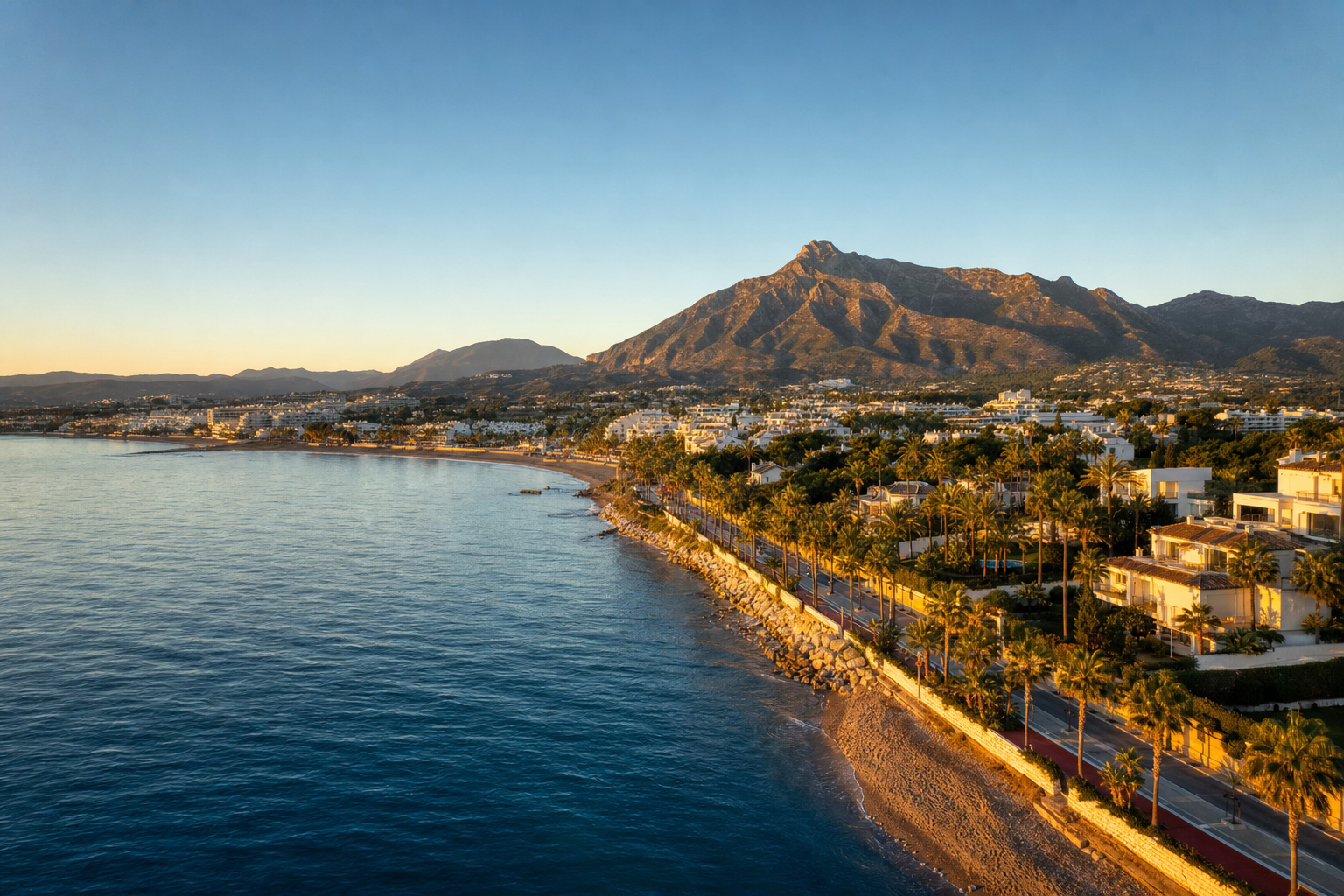
For four decades, Sotogrande was the inside joke of European old money. Forty kilometres west of Marbella, behind a discreet exit off the A-7 just before the Strait of Gibraltar, the original 1962 Joseph McMicking masterplan attracted Anglo-Argentine polo families, Madrid industrialists, and the kind of British financiers who preferred Wellingtons to Lamborghinis. There were no rooftop bars. There was no boulevard. There was, deliberately, nothing to photograph.
In 2026, that ethos is being tested — and, in places, rewritten — by La Reserva de Sotogrande. Once the inland upper plateau of the resort, La Reserva has become a distinct submarket attracting founders in their late thirties and forties, second-generation principals of European family offices, US tech operators relocating after exits, and Gulf families seeking a European base with full-amenity privacy. The asking prices follow the plots: the most exceptional ones, above the Almenara golf course, carry the estate's highest. Current asking prices by zone, each with its sample size and date, are on the Marbella Property Index (museselection.es/marbella-property-index).
This is not Marbella centre. And that, increasingly, is the entire point.
The transformation of La Reserva is best understood through three pieces of infrastructure that did not exist a generation ago in their current form.
The first is The Beach at La Reserva, an inland saltwater lagoon and beach club opened in 2017 and continually upgraded since. Locally known as El Cubo for the cube-shaped pavilion that anchors the site, the facility added a 2,800-square-metre lagoon, two restaurants, cabanas, and a members' pool that, by 2026, operates a strict day-pass quota even in shoulder season. For a resident of a €10 million La Reserva villa, walking the family to The Beach by buggy on a Sunday morning is the texture of the lifestyle. For a buyer comparing Sotogrande to the Golden Mile, it answers the only legitimate objection a beachfront purist could ever raise: there is, now, a beach.
The second is the Santa María Polo Club, which together with Ayala Polo and the Sotogrande Polo Club hosts what the Federación Internacional de Polo recognises as the most serious professional season in continental Europe. The August High Goal tournaments draw 22-goal teams, and the resident Argentine playing community — three or four hundred families across the season — is now a permanent demographic feature. Polo is not a marketing veneer. It is the reason a family that keeps horses will buy a villa with private stabling here rather than spend the same in Sierra Blanca.
The third is Sotogrande Marina. Unlike Puerto Banús, the marina is residential first and nightlife second; the apartments ringing the Ribera del Marlin are owner-occupied, restaurants close by midnight, and the central plaza of the Ribera del Obispo functions as a village square. The marina's refusal to become a clubbing destination is, to the La Reserva buyer, a feature rather than a bug.
If The Beach is the social engine, golf is the financial moat. La Reserva buyers acquire access to a four-course density that no other European address can replicate within a ten-minute drive: the Real Club Valderrama, host of the 1997 Ryder Cup and four decades of European Tour events; the Real Club de Golf Sotogrande, the original 1964 Robert Trent Jones Sr. design and the founding course of the resort; La Reserva Club itself, a Cabell B. Robinson layout consistently ranked top-five in Spain; and Almenara, the 27-hole Dave Thomas course connected to the SO/ Sotogrande hotel and rebranded under Accor management.