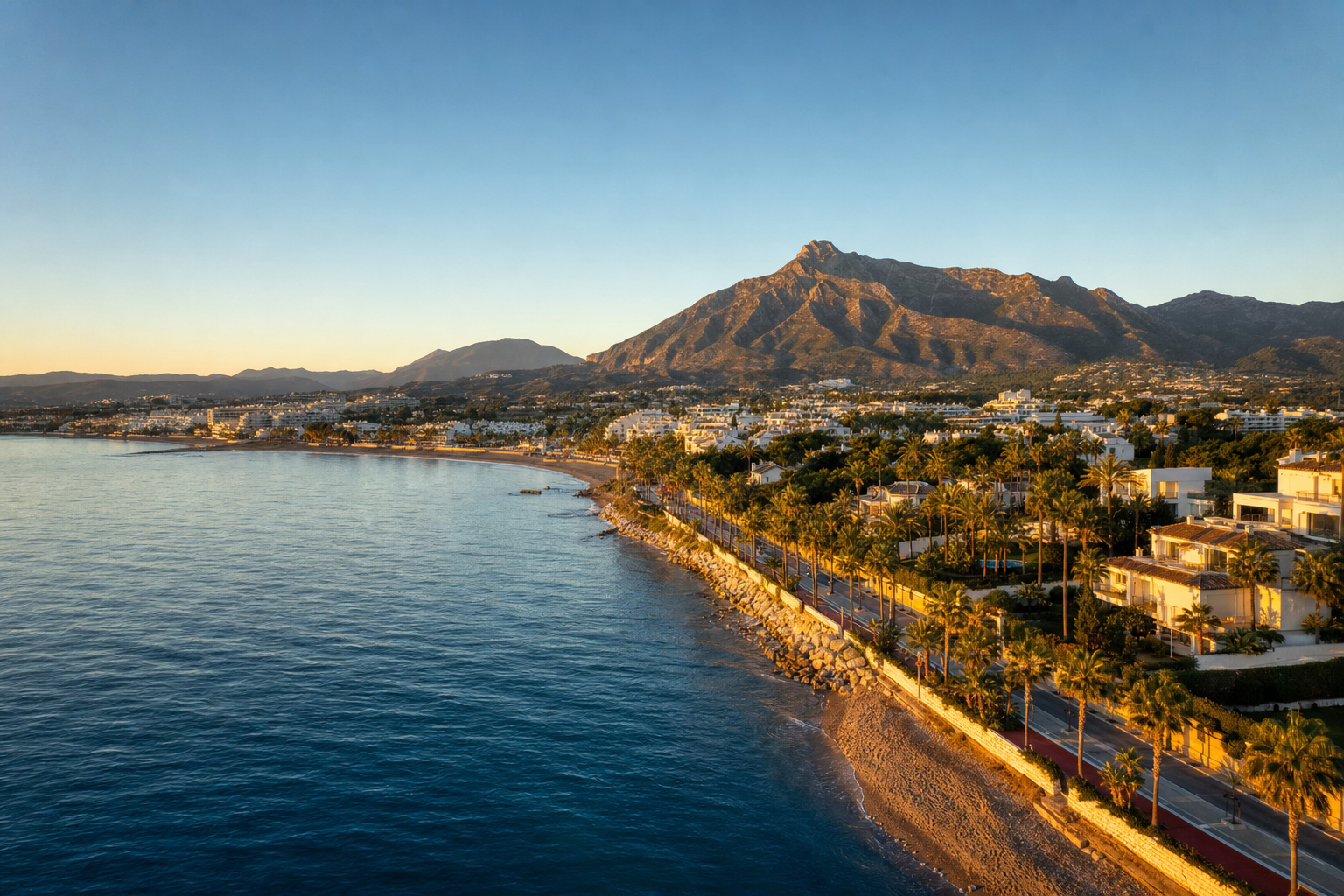
Every market has its rhythm. In Sotogrande, that rhythm is set, in part, by horses.
The high-goal polo season at Santa María Polo Club runs through July and August, culminating in the Copa de Oro — one of the three most prestigious polo tournaments in Europe. For six to eight weeks, the campo fills with a particular demographic: owners of large estates, family offices with Iberian exposure, buyers who have been circling the market for two or three years and use the season as a reason to finally walk a property in person. The polo is the occasion. The property conversation is what happens around it.
The pattern is a familiar one. What 2026 adds is a tighter inventory context and a buyer profile that has shifted in ways worth noting.
What the Polo Season Actually Does to Deal Flow
The mechanism is straightforward, even if it is rarely discussed plainly. A buyer flies into Gibraltar or Málaga in late July. They have tickets to the Copa de Oro. They also have, somewhere in an email thread, a shortlist of properties their advisor has been curating since April. The polo weekend is the pivot point — it justifies the trip, it structures the social calendar, and it creates the physical proximity necessary for serious viewings.
In our own register, Sotogrande properties see a clear uptick in qualified viewing requests between mid-July and the last weekend of August. Not casual enquiries — those are distributed fairly evenly across the year — but the kind of request that comes with a specific budget, a stated timeline, and a buyer who has already seen comparable properties in Marbella or further afield.
The off-market side of the market behaves differently. Residences that are not published and are shown by introduction tend to move on shorter notice and through warmer introductions. In the desk's experience, conversations that lead to a sale in Sotogrande often begin at the polo grounds or at dinners held during polo week. The transaction is formalised months later, but the introduction happens in August.
The 2026 Inventory Picture in Sotogrande
Sotogrande is not a large market in absolute terms. The zona is geographically contained — La Reserva, the Old Village, the marina, the polo fields themselves, and the surrounding cortijo land. The number of genuinely distinct properties at the €2M to €8M price point, the range most active during polo season, is smaller than casual observers assume.
Heading into the 2026 season, available inventory at this level is tight. Some of this is structural: long-standing owners have little incentive to sell. Some of it is behavioural: a portion of Sotogrande's ownership base treats the property as a generational asset rather than a tradeable one, and does not list unless circumstances compel them to.
The practical consequence for buyers arriving during polo season is that the visible, publicly listed inventory represents only a fraction of what could theoretically transact. The properties worth serious attention are often not on the portals. They surface through the network — through advisors who have maintained relationships with estate owners over years, through the kind of introductions that happen precisely during the social density of the polo season.
For sellers with the right property and the right timing, the same dynamic is an advantage. A motivated buyer, in Sotogrande for the polo, with genuine capital and a short decision window, is a different counterparty than a buyer conducting a desktop search in February.
How to Read the Market Signal During August
Not every uptick in activity during polo season represents genuine market movement. Some of it is noise: speculative enquiries from attendees who enjoy the idea of owning in Sotogrande but are not yet in a position to act, or from buyers who are using Sotogrande as a reference point while actually looking at La Zagaleta or Benahavís.
The signal worth reading is more specific. Watch which residences come off the register between late July and mid-September, and watch the listings that have been published since spring. In some years, polo season functions as a clearing mechanism — residences that found no buyer during the quieter months of May and June find one in August, because the right buyer finally arrived in person.
In other years, the season passes without significantly moving deal flow, which is itself informative. It suggests that pricing expectations have drifted above what serious buyers will accept, or that the stock on offer lacks the quality that this particular buyer profile is seeking. The absence of activity is data.
Whether a season clears stock depends partly on macroeconomic conditions in the buyers' home markets — in the desk's own enquiries, Sotogrande buyers come from the UK, Switzerland and, increasingly, the Gulf; that is an observation, not a count — and partly on whether vendors are willing to meet the market rather than defend aspirational asking prices.
The Buyer Profile Polo Season Concentrates
It is worth being precise about who polo season actually brings to the property market, because the assumption that it delivers a uniform wave of high-net-worth buyers oversimplifies the picture.
The core buying demographic for Sotogrande at €2M and above tends to share certain characteristics: they have existing connections to the equestrian world, or to the families and institutions that organise around it; they are often making a second or third property purchase in Spain rather than a first; and they tend to have a longer decision horizon than the urgency of August suggests. The polo season concentrates their attention and creates the conditions for a conversation to begin, but the transaction itself may close in October or November.
There is a secondary profile: buyers who have no particular connection to polo but who are drawn to Sotogrande's relative quietness compared to Marbella, its land availability, and the specific character of La Reserva and the golf and marina zones. These buyers may encounter the property market during polo season simply because that is when their social network brings them to the area. For them, the polo is incidental.
Both profiles matter. The first is more likely to be interested in cortijo-style estates and large plots with equestrian facilities. The second more often gravitates toward contemporary villas with clean lines and managed communities. The inventory that satisfies each is distinct, and the polo season does not serve them equally.
What Sellers Should Consider Before the Season Opens
If a property in Sotogrande is being prepared for market, the window between now and the first week of July matters. Serious buyers who will attend the polo in 2026 are already, in many cases, compiling their shortlists. They work with advisors they trust. Those advisors are sourcing properties now, not in August.
Being well-positioned in the market before the season — with accurate documentation, a defensible asking price, and visibility through the right channels, including the off-market networks that serve this buyer profile — is materially more valuable than trying to launch a listing during the polo itself, when attention is fragmented and the volume of social obligation makes extended viewings difficult to arrange.
Presentation matters in a way that is specific to this market. Sotogrande buyers at this level are experienced. They have seen properties in comparable zones — Marbella's Golden Mile, La Zagaleta, Nueva Andalucía, the better addresses of Puerto Banús. They carry a mental benchmark. A property that is priced correctly but shows poorly will lose to a slightly inferior property that shows with clarity and confidence.
Conversely, a well-presented property with a realistic price and a motivated seller can move quickly in August, precisely because the buyer is present, focused, and aware that the inventory is limited.
Reading the Pattern Forward
The relationship between the sotogrande polo season and property activity is not a marketing abstraction. It is a structural feature of how this particular market operates — one that follows from the specific social geography of high-goal polo in Europe, the profile of the people it attracts, and the physical compression of decision-making that happens when buyers are already in the campo.
For anyone tracking this market seriously, the weeks following the Copa de Oro are the ones to watch: which residences leave the register, and which listings published since spring are still there. Spain publishes no per-property closing prices, so the asking side of the register is what can be read.
The polo season does not make the market. But it reveals it, and that is almost as useful.