Marbella East
Marbella East — Marbella Este — is not one address. It is roughly ten kilometres of them, the stretch of coast running from the Río Real valley at the eastern edge of Marbella town to the Artola dunes and the small marina of Cabopino on the boundary with Mijas. What holds the stretch together is not a boulevard or a beach club but a landscape: umbrella pine down to the sand, and at the eastern end one of the last living dune fields on this coast.
3 residences on offer.
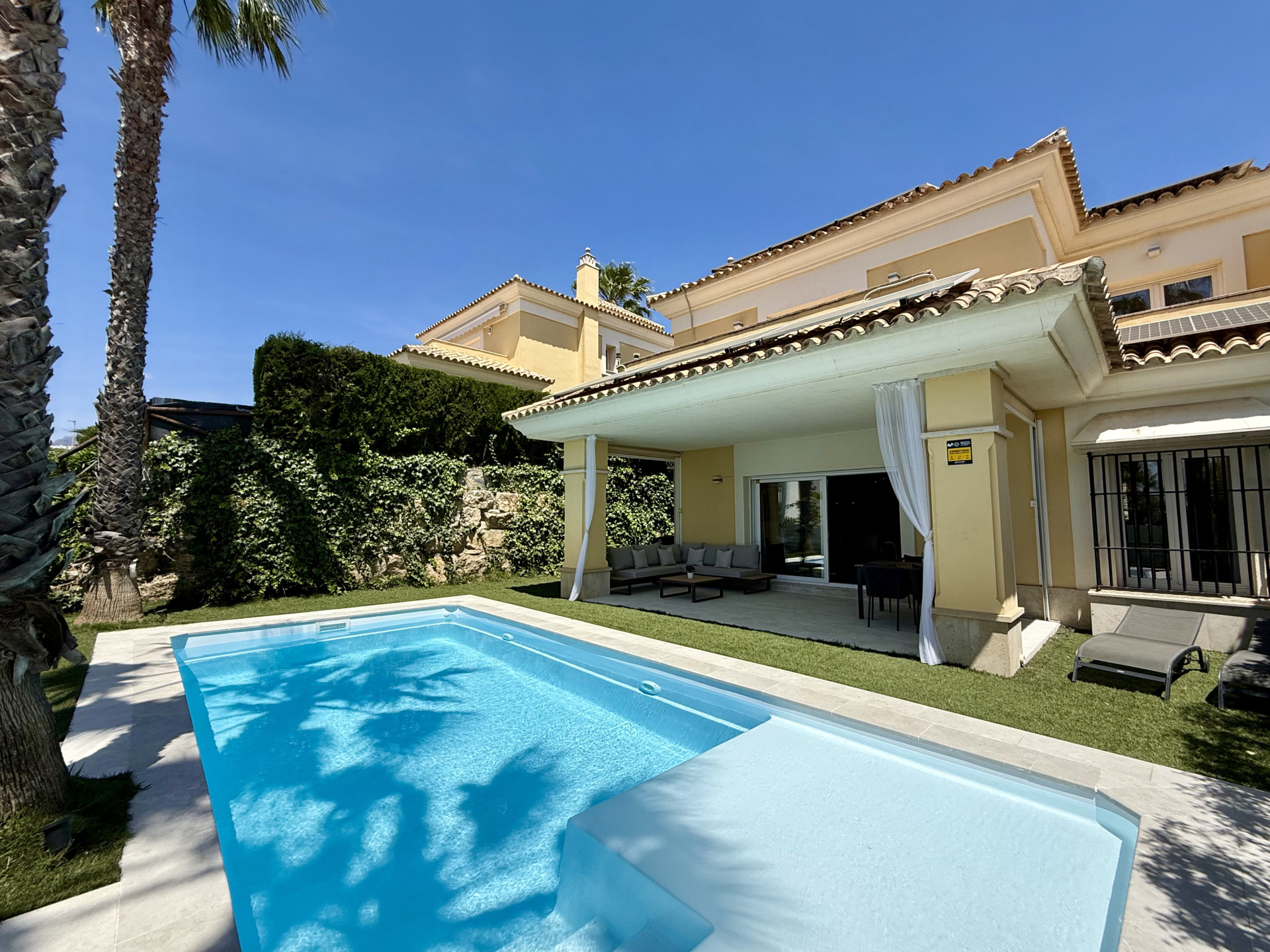
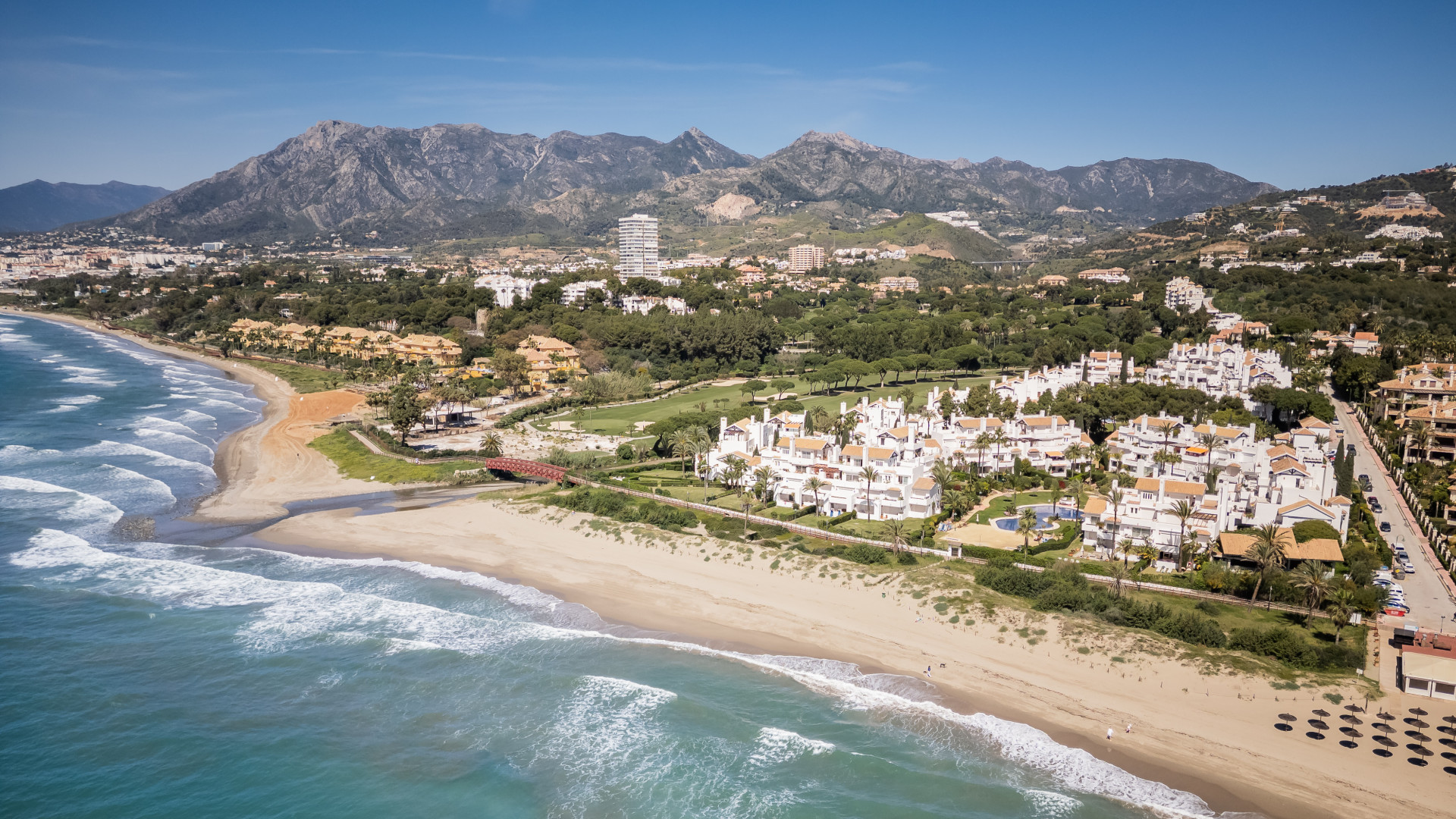
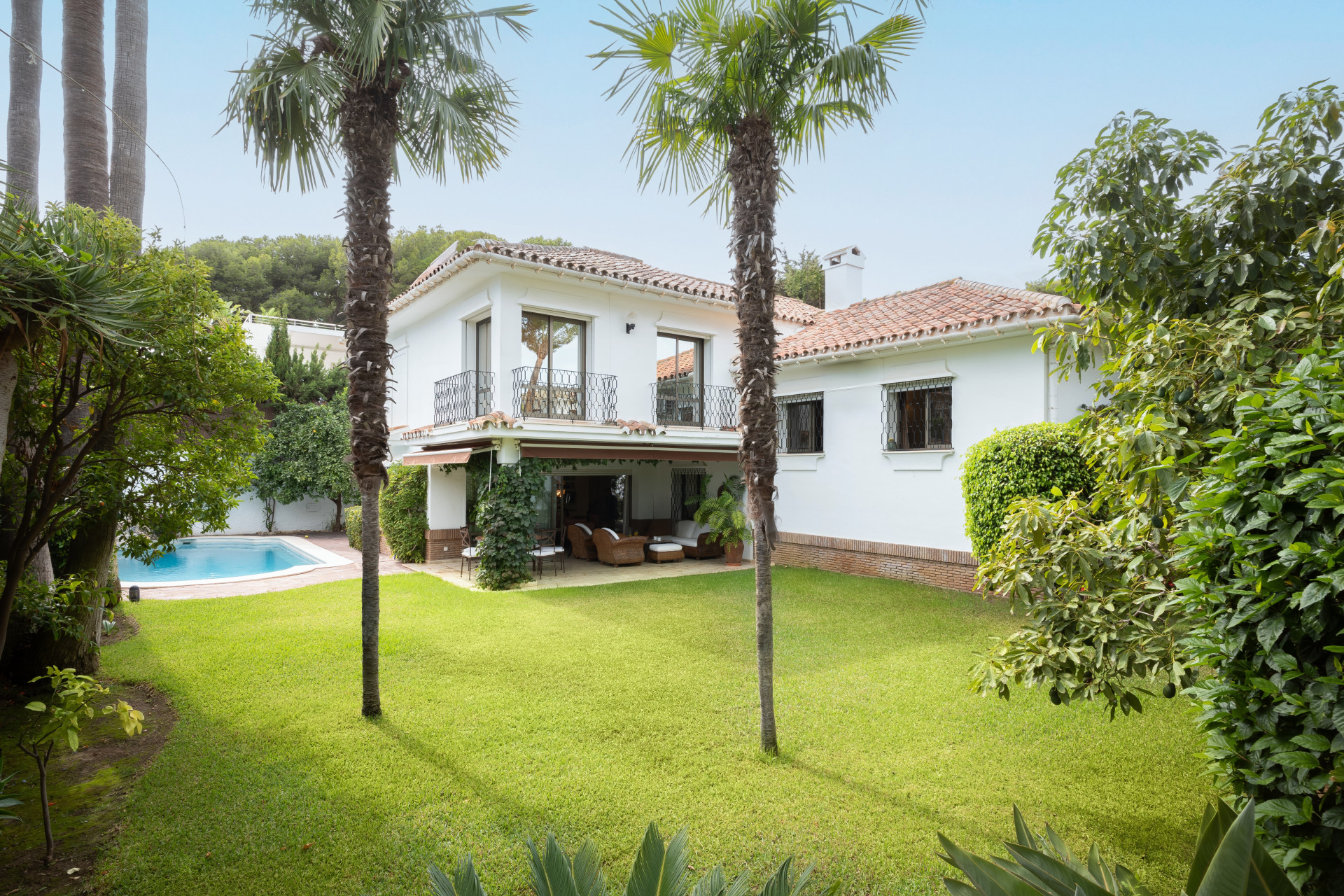
Marbella East (Marbella Este, East Marbella) is the roughly ten-kilometre coastal district between the Río Real valley and Cabopino, taking in Los Monteros, El Rosario, Las Chapas, Marbesa, Elviria and the Artola dunes. On the 7 August 2026 register snapshot the zone shows a median asking price of €2,925,000 and a median €5,599 per m² across 34 priced listings at or above €1,500,000. The A-7, the old N-340, is its spine; every sub-area is an exit off it.
The district has a founding figure, though a quieter one than the west’s. While Alfonso de Hohenlohe was building the show coast around the Marbella Club, the banker Ignacio Coca opened the Hotel Los Monteros east of town in 1962 — thirty-five rooms at first — and developed the estate around it: the Río Real golf course in 1965, Javier Arana’s design, and the Incosol spa in 1973. The pattern he set held. The east grew as a coast of family urbanisations rather than resorts.
Nobody who lives in Marbella East says they live in Marbella East. They live in Los Monteros, or Hacienda Las Chapas, or Elviria. The district opens with its grandest stock: Los Monteros, the estate Coca laid out around his hotel, sloping from the A-7 to a frontline of large villas and the La Cabane beach club, with the Río Real golf valley inland and the Hospital Costa del Sol — the coast’s main public hospital — at the junction.
East of Los Monteros, a band of low-rise beachside urbanisations runs between road and sand: El Rosario, Costabella, Carib Playa, Marbesa — streets of villas and bungalows largely built out decades ago, where contemporary product arrives through the rebuild of existing plots rather than new land. North of the road, Las Chapas and the gated Hacienda Las Chapas climb through mature pine on some of the largest private plots east of town, with La Mairena higher still, partly across the municipal boundary in Ojén — a line worth checking on any escritura.
Elviria is where the district does its shopping and its school run: commercial centres either side of the A-7, the Santa María golf course, the Hotel Don Carlos on the beach and, beside it, Nikki Beach — since 2003 the one deliberately loud address on an otherwise quiet coast. The district ends at Cabopino: a small wooden-jetty marina, the Cabopino golf course, and the protected dune field of Artola behind the sand, with the Torre Ladrones watchtower standing over it. Beyond the dunes, Marbella ends.
The register prices all of that as one zone. A sample of 34 priced listings supports a zone median; spread across six or more named sub-areas it supports nothing, so we decline to publish per-urbanisation figures rather than manufacture them. Qualitatively, frontline asking prices per square metre at Los Monteros and Marbesa sit well above the pine hillside; quantitatively, the honest unit of analysis is the individual residence.
Read the sample size before the medians. Thirty-four listings is the district’s top slice, not the district — Marbella East holds deep inventory below the €1.5 million register floor, apartments, townhouses and smaller villas, that we deliberately do not track. A luxury register describes the luxury tier; treat these figures as the price of the district’s upper register, not of Elviria at large.
What the medians then say is the plainest value statement on the coast. The zone’s median asking price, €2,925,000, sits within €25,000 of the all-zone register median of €2,950,000 (n=579). Its median asking price per square metre, €5,599, sits €1,268 below the all-zone €6,867 — and €3,388 below the Golden Mile’s €8,987 (n=57). Same headline budget as the register at large; materially more built area for it.
The comparison with Marbella town runs the other way: the town zone’s median asking price is lower (€2,175,000 · n=40) but its per-metre median is higher (€7,968). Town buys position and walkability in fewer metres; the east buys plot, pine and built area. One more comparison earns its place — Sotogrande, the coast’s other family-first address, measures €5,320 per m² and a €3,650,000 median (n=31) on the same snapshot: two districts built around schools and sport, priced within €300 per square metre of each other.
Every figure above is an asking price. Spain publishes no per-property closing prices — notary and registry data reach the public only as lagged, area-level aggregates — so no source, this desk included, can put a defensible transaction median, days-on-market figure or year-on-year sold-price movement on Marbella East. It is also a median over a mixed sample: 34 listings span frontline Los Monteros villas and pine-hillside Elviria houses, and a single per-metre figure compresses that spread rather than describing any one street.
The east is the part of Marbella arranged around a school calendar. The English International College — founded in the summer of 1982 with thirty-two pupils, now the east side’s established British-curriculum school — sits between Las Chapas and Elviria; the German School of Málaga, founded in 1898 and re-established in 1967, teaches in the hills at La Mairena, just across the municipal line in Ojén. For many buyers here the school run is the commute, and the district is shaped accordingly.
The beaches are the district’s second argument. They run wider and quieter than the west’s, backed by pine rather than promenade, and they end at the Dunas de Artola — 19 hectares protected as a natural monument since 2003, crossed by boardwalks and watched over by the Torre Ladrones, a fifteen-metre tower of possibly Roman origin, the tallest on the Málaga coast and a protected monument since 1985. Golf is strung the district’s whole length rather than gathered in one valley: Río Real (Javier Arana, 1965), the Marbella Golf & Country Club (a 1994 Robert Trent Jones Sr design), Santa María at Elviria, Santa Clara, and Cabopino at the eastern end.
Qualitatively — the register measures listings, not buyers — the east’s demand is the coast’s most settled: Northern and Western European families buying for year-round use, school-calendar moves timed to complete before September, and second-generation owners in the older urbanisations. That is an observation about how the market conducts itself, not a statistic; no public dataset measures holding periods, buyer nationality or off-market share, and we decline to invent any of them.
The honest limitation: life here is car-shaped. There is no old town, no walkable centre; the A-7 is a working motorway, and its Elviria junctions queue on August evenings. Buyers who want to walk to dinner belong in Marbella town. Buyers who want pine, sand and a school run tend to stop looking once they have seen the east.
The mechanics are standard Spain — reservation, private purchase contract, completion before notary — with three east-side overlays. Frontline residences from Los Monteros to Marbesa and Cabopino sit against the public maritime-terrestrial domain governed by the Ley de Costas, so the planning file and any concession status are a first-order legal question. Much of the district’s stock dates from the 1960s to the 1980s, which makes the technical survey and the licensing path for a reform as important as the price. And in the hills the municipal boundary matters: parts of La Mairena sit in Ojén, not Marbella, with different planning and local-tax regimes — the escritura, not the marketing, says which.
The measured data, and what sits beside it.
From the gate of Marbella East.
Schools, healthcare, golf and the coast.
Asked, before the first visit.
- What is Marbella East (Marbella Este)?
- Marbella East, or Marbella Este, is the roughly ten-kilometre coastal district running east from the Río Real valley at the edge of Marbella town to the Artola dunes and Cabopino marina on the Mijas boundary. It is a chain of named urbanisations — Los Monteros, El Rosario, Las Chapas, Marbesa, Elviria, Cabopino among them — developed from 1962 onward, characterised by pine-backed beaches, golf and family residency rather than resort life.
- How much does property in Marbella East cost?
- On the Muse Selection live register (snapshot 7 August 2026, €1.5M floor), the median asking price in Marbella East is €2,925,000 across 34 priced listings. The register only tracks €1.5M-plus inventory, and this district holds substantial stock below that floor, so these figures describe its upper tier, not the whole market. These are asking prices — not closing prices, which Spain does not publish per property.
- What is the price per square metre in Marbella East?
- The register measures a median asking price of €5,599 per m² across 34 priced Marbella East listings, snapshot 7 August 2026. That sits €1,268 below the all-zone register median of €6,867 per m² (n=579) and €3,388 below the Marbella Golden Mile’s €8,987 (n=57). It is a median over a mixed sample — frontline villas to hillside pine — so no single street prices at exactly this figure.
- Which areas make up Marbella East?
- From west to east: Los Monteros and the Río Real golf valley; the beachside urbanisations of El Rosario, Costabella, Carib Playa and Marbesa; Las Chapas and Hacienda Las Chapas on the pine hillside, with La Mairena in the hills above; Elviria, the district’s commercial centre; and Cabopino with its marina and the protected Artola dunes. The register prices them as one zone — its 34-listing sample is too small to split into per-urbanisation medians honestly.
- Marbella East or the Golden Mile — what does the data say?
- On the 7 August 2026 snapshot, Marbella East’s median asking price is €2,925,000 at €5,599 per m² (n=34); the Marbella Golden Mile’s is €4,290,000 at €8,987 per m² (n=57). The same money buys materially more built area and plot in the east, against address, density of established luxury stock and walkable resort life on the Golden Mile. Different products; the per-metre gap of €3,388 is the price of the postcode.
- Which schools serve Marbella East?
- The English International College, founded in 1982, sits between Las Chapas and Elviria and is the east side’s established British-curriculum school. The German School of Málaga, founded in 1898 and re-established in 1967, teaches at La Mairena in the hills above Elviria, across the municipal line in Ojén. Aloha College and Swans International lie west of Marbella town, within school-run range. This concentration is a principal reason the district reads as Marbella’s family coast.
- Is Marbella East a good investment?
- No honest answer can cite realised returns, because Spain publishes no per-property closing prices — there is no public record of what Marbella East homes actually sold for. What can be measured: on 7 August 2026 the zone’s median asking price (€2,925,000) sits within €25,000 of the all-zone register median, while its €5,599/m² sits €1,268 below it — more built area per euro than the register at large. Whether that converts to a return is unknowable from public data.
- Where does Marbella East start and end?
- It runs from the Río Real valley, at the eastern edge of Marbella town, to Cabopino marina and the Artola dunes at the boundary with Mijas — roughly ten kilometres of coast either side of the A-7. The Hospital Costa del Sol marks its western gate; beyond the dunes and the Torre Ladrones watchtower, the municipality of Marbella ends.
- Which listings does the figure on this page cover?
- Every residence the Muse Selection catalogue publishes in the district, from its €350,000 floor upward — apartments, townhouses and villas alike — deduplicated so one home is counted once however many agencies list it. Until 13 August 2026 the figure covered only the €1.5M-and-above tier, and the number of listings behind it was a fraction of this one; the medians moved accordingly. A portal search will still show more rows, because portals count the same home once per agency and apply no floor at all.
Residences in Marbella East are shown by appointment.
If we haven't yet met, please mention how you found us. Allow ninety minutes; bring no expectations.
Look at Marbella East now
Describe it in your own words — or ask our adviser.